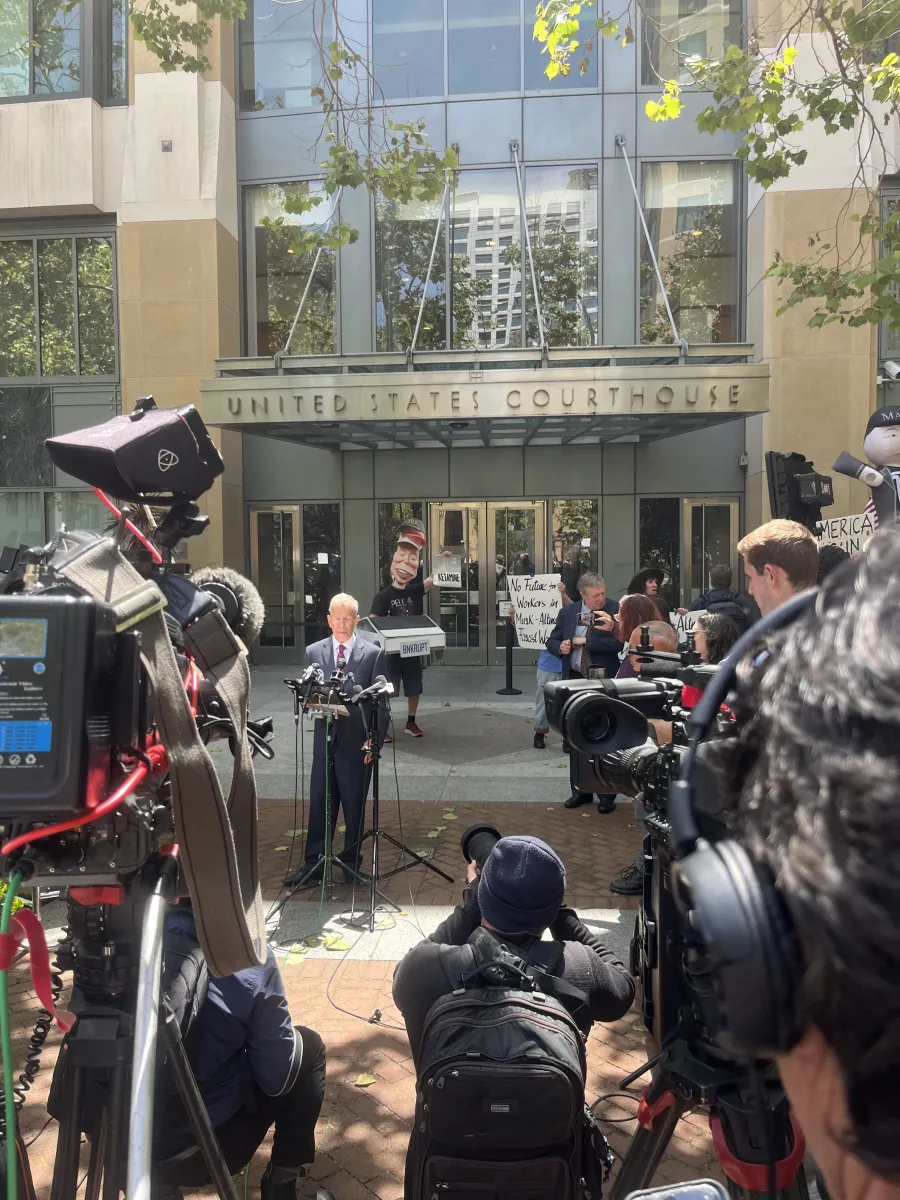

Nine jurors in California are now weighing the implications of a trial involving OpenAI, the prominent artificial intelligence research organization.
The case, initiated by Elon Musk against OpenAI’s co-founders and Microsoft, has navigated through various topics, from the fallout of the founders’ split in 2018 to Altman’s controversial dismissal and reinstatement in 2023. Jurors are now tasked with a few specific concerns:
- Breach of charitable trust — did OpenAI and its co-founders, Sam Altman and Greg Brockman, fail to honor an agreement with Musk regarding the intended use of his donations for specific charitable aims rather than general operational expenses?
- Unjust enrichment — did the defendants benefit financially from Musk’s contributions by enabling the for-profit segment of OpenAI to flourish instead of adhering to the charitable focus?
- Aiding and abetting breach of charitable trust — was Microsoft aware of Musk’s stipulations regarding donations and did it significantly contribute to any harm he experienced?
In its defense, OpenAI has presented several arguments for the jury’s consideration:
- Statute of limitations — if OpenAI can prove that any grievances Musk claims occurred prior to key dates (August 5, 2021, for the first claim; August 5, 2022, for the second; and November 14, 2021, for the third), then his allegations will be deemed irrelevant.
- Unreasonable delay — Musk’s decision to pursue legal action in 2024 constitutes an unreasonable lag which diminishes his claim for damages.
- Unclean hands — Musk’s conduct around his claims has been characterized as unacceptable, which may undermine the validity of his allegations.
Should Musk succeed, OpenAI’s status as a for-profit entity could be jeopardized, but the implications remain uncertain. A series of hearings will take place next week, allowing attorneys from both sides to discuss the potential consequences of a favorable verdict for the plaintiffs. Yet, these discussions may become irrelevant if the jury decides against Musk.
Breach of charitable trust
Musk’s legal team argues that the defendants were acutely aware of his intent to support a non-profit dedicated to ensuring the benefits of AI are accessible to all and to prevent its consolidation within a single entity. They contend that a $10 billion investment from Microsoft in 2023 represented a pivotal moment, intensifying Musk’s concerns.
Musk’s representatives assert this investment diverged from prior funding and resulted in the commercial success of OpenAI’s products, overshadowing its original charitable mission.
OpenAI’s defense emphasizes that no witness could identify any explicit conditions attached to Musk’s donations, regardless of their roles, including his financial adviser and other key associates. They argue that all parties recognized the necessity for private fundraising to meet organizational goals, noting Musk’s attempts to establish a for-profit entity linked to OpenAI and his interest in merging OpenAI with Tesla. Furthermore, they mention that other donors did not claim their charitable agreements had been compromised.
A forensic accountant testified that Musk’s contributions were expended well before the August 5, 2021, cutoff, indicating that they were used appropriately prior to his legal action.
OpenAI maintains that its commercial activities effectively bolster the overall mission of the organization, having generated nearly $200 billion in equity that supports its non-profit foundation. Sam Altman also pointed out that offering ChatGPT for free aligns with the goal of distributing AI benefits broadly.
Unjust enrichment
The plaintiffs cite the substantial valuations of shares held by OpenAI’s founders and Microsoft as evidence that Musk’s funding was misappropriated for personal gain rather than advancing the charitable goals. They suggest that the for-profit operations were commercially driven, leaving the foundation stagnant with insufficient staffing and no control over its own profit-making arm.
Conversely, OpenAI asserts that Musk’s contributions were depleted by 2020, with any equity benefits arising post-2018, when Musk distanced himself from the organization. Additionally, they reference mutual agreements among key figures that compensating researchers with equity was essential for achieving advancements in artificial general intelligence (AGI).
Executives argue that the for-profit efforts have been instrumental in driving progress towards the foundation’s objectives, and the non-profit board still governs the for-profit entity, instituting improved oversight after Altman’s turbulent dismissal and prompt reinstatement in 2023.
Aiding and abetting
Musk’s allegations spotlight the “blip,” a period when Microsoft CEO Satya Nadella allegedly intervened to facilitate Altman’s return and aid in establishing a new governing board for OpenAI. The plaintiffs suggest Microsoft’s business interests may have nudged OpenAI away from its foundational aims and highlight a clause in Microsoft’s agreement granting it veto rights over substantial corporate decisions at OpenAI.
Microsoft representatives assert that its executives were unaware of any specific conditions linked to Musk’s donations despite rigorous due diligence and never exercised veto power over OpenAI’s actions. They contend that the company’s investments and resources have enabled OpenAI to reach significant milestones.
Statute of limitations
Musk has indicated that his distrust of his co-founders intensified until he firmly believed they acted against his interests upon learning about Microsoft’s impending $10 billion investment, which was finalized in 2023. He delayed filing his suit until 2024.
In response, OpenAI’s lawyers argue that the details of that agreement were outlined in a term sheet from a previous funding round in 2018, which Musk was aware of but did not review thoroughly. They point to public statements and communications from previous years indicating Musk could have known about OpenAI’s direction long before his lawsuit, including critical comments he made in tweets and a vote by his adviser that approved various transactions.
Ultimately, OpenAI’s legal team stresses that Musk’s formal engagement with the organization concluded in 2018, and his last donations were made in 2020.
Unreasonable delay
OpenAI’s counsel suggests that Musk’s lawsuit primarily stemmed from realizing he misjudged the organization after the debut of ChatGPT transformed the AI landscape. They contend that OpenAI has functioned successfully under its current framework since Microsoft’s initial investment in 2018, and demanding restructuring years later is unreasonable.
Unclean hands
Evidence has surfaced indicating Musk had been plotting his AI initiatives while still leading OpenAI, even recruiting employees to Tesla’s AI projects. OpenAI posits that these actions compromised the entity during a time when it was utilizing Musk’s donations for its mission. They also raise issues regarding Zilis’s undisclosed personal ties to Musk and contend that Musk intentionally withheld donations in 2017 to gain control over a prospective for-profit branch of OpenAI. “Mr. Musk abandoned OpenAI for dead in 2018,” stated Bill Savitt, leading attorney for OpenAI, addressing the jury.
When you purchase through links in our articles, we may earn a small commission. This doesn’t affect our editorial independence.
#jury #decide #case #Elon #Musk #Sam #Altman