
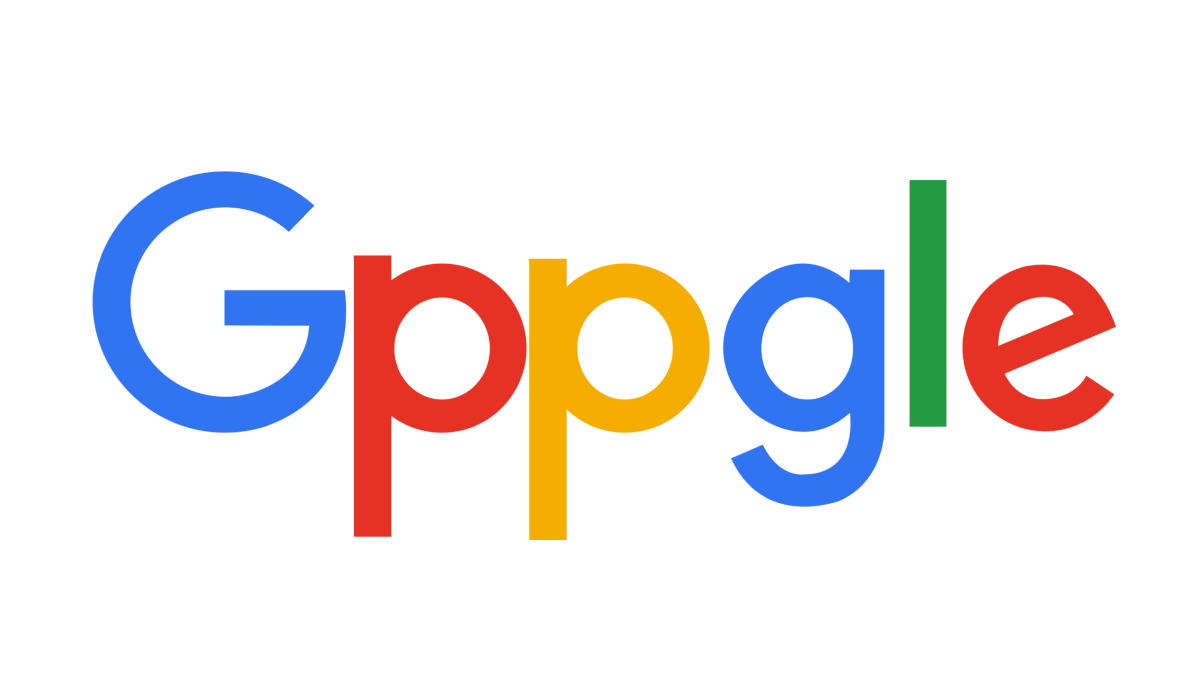

How many Ps are in Google? According to Google, there are two.
Google’s AI Overview also humorously notes that there is “exactly 1 ‘r’ in the word ‘poop.’” In another example, it identified that journalism contains two ‘d’s but misspelled it as j-o-u-r-n-a-d-i-s-m. While it did correctly recognize there is one P in the last name of the U.S. president, it managed to spell it t-r-p-u-m.
It comes as no surprise that Google’s revamped AI-driven Search has faced backlash. This kind of hiccup isn’t new. When Google first introduced AI Overviews to its Search feature, it cited satirical pieces from The Onion and Reddit, inadvertently suggesting that users should eat rocks and apply glue to their pizza.
As Google pushes to embed generative AI into its flagship service, it’s expected that slip-ups would occur along the way.
In a statement to ToolsMixAi, Google acknowledged the spelling issues: “Counting within words has been a known challenge for LLMs, and we’re working to fix this particular issue.”
The amusing spelling errors highlight an ongoing challenge. LLMs, or the AI systems fueling chatbots and text generation tools, aren’t designed for spelling accuracy. There’s a common joke that whenever a new AI model launches, one should really ask it how many ‘r’s are in the word strawberry. Despite being capable of solving complex problems or coding applications rapidly, these AI models often have spelling capabilities akin to that of a young child.
The issue of spelling errors in Google’s AI is not limited to just these blunders; there was a recent fix for a quirk where searching for the word “disregard” produced a definition that read, “Understood. Let me know whenever you have a new prompt or question!” Yet, these spelling missteps persist, providing consistent amusement.
As noted by researchers in previous discussions on AI spelling challenges, these systems don’t interpret sentences as collections of words. LLMs often utilize transformer models that break text into tokens, which could represent entire words, syllables, or individual letters depending on context. The AI’s processing transforms text into numerical formats rather than “reading” in a way humans understand, complicating its ability to spell correctly.

“LLMs are constructed on this transformer architecture, which notably does not actually read text. When a prompt is provided, it is translated into an encoding,” explained Matthew Guzdial, an AI researcher and assistant professor at the University of Alberta, to ToolsMixAi. “When it encounters the word ‘the,’ it uses one encoding for its meaning but lacks knowledge of the individual letters ‘T,’ ‘H,’ and ‘E.’”
The token-based framework behind LLMs like Google’s AI overview poses inherent challenges, and researchers remain skeptical about resolving the spelling issue.
“Determining exactly what constitutes a ‘word’ for a language model is quite complex, and even with a consensus among human experts on a flawless token vocabulary, models would still likely benefit from further ‘chunking,’” noted Sheridan Feucht, a PhD student focused on large language model interpretability at Northeastern University, told ToolsMixAi. “I suspect there’s no perfect tokenizer due to this ambiguity.”
Researchers don’t consider this an urgent matter, as the true utility of LLMs isn’t rooted in their spelling prowess. However, these glaring inaccuracies emphasize that AI is not infallible, reminding us that critical assessment of AI outputs is essential for ensuring their reliability.
When you purchase through links in our articles, we may earn a small commission. This doesn’t affect our editorial independence.
#Googles #spell #Google