
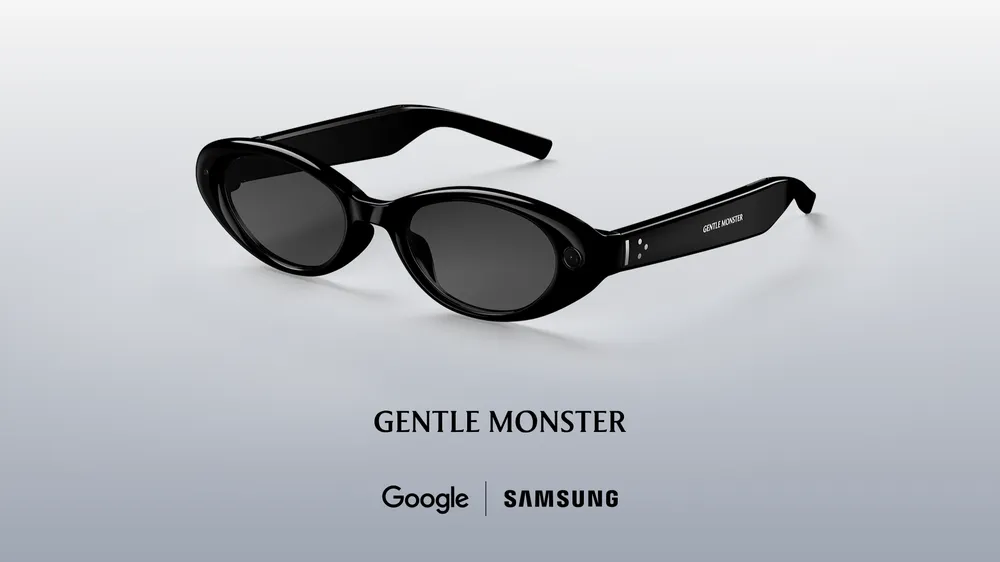

Google Reveals Innovative AI-Enhanced Glasses at I/O Developer Conference
At the Google I/O developer conference this week, we had the opportunity for a brief hands-on with Google’s upcoming AI-powered glasses — not the audio-only glasses that the company said will begin shipping this fall but rather the glasses that offer a combined audio and visual experience.
Initially unveiled at last year’s showcase, these Android XR glasses feature an in-lens display that overlays useful information on your surroundings. This includes widgets for various functions, such as weather updates, navigation, Uber details, and even live translation, with the possibility to create custom widgets using AI.

The glasses can complement both iOS and Android devices, supporting both audio-only and the future visual formats.
These eyewear prototypes indicate a significant evolution from the upcoming audio-only version set for release this fall. Developed alongside Warby Parker, Gentle Monster, and Samsung, these glasses merge Google’s cutting-edge technology with stylish designs.
The prototypes we engaged with were notably early-stage, albeit well-developed enough for public testing. Representatives explained that the focus during this phase was on the display technology, rather than cosmetic details regarding different designs. This indicates that what we experienced may significantly differ from the final retail models in terms of fit and features.
In the final version, the glasses will include an intelligent feature to recognize when they are worn or removed; however, this was not functional in the prototype.

Activating the AI feature, Gemini, requires a brief two-second press on the right frame of the glasses, accompanied by a startup chime indicating it is ready for commands. In our initial tests, we requested music, but the loud environment hindered a thorough assessment of the sound quality. First impressions suggested that while the glasses suffice for casual listening, they might not replace more quality-oriented earbuds or headphones.
For instance, to stop the music, a simple tap on the side of the frame suffices.

In another trial, we captured a photo by pressing a designated button. Though the display was inactive at the time, the image was successfully sent to our phone and watch. Editing features are also being developed, allowing users to capture photos through verbal commands, followed by AI enhancements.
Due to the high Wi-Fi traffic at the Google I/O location, transmitting the edited images took about 45 seconds.

When the display is functional, a basic home screen appears in your line of sight, featuring preloaded widgets for weather and countdowns. Users can also set up shortcuts to their preferred apps like Google Maps or Translate.
Though the prototype currently has one display positioned over the right eye, it can accommodate both single and dual displays. In our experience, the image quality was somewhat blurry due to our contact lenses, but improving visibility may require adjustments for different prescriptions.

A standout demo involved the translation capability, which utilizes the Google Translate app. As a speaker delivered rapid Spanish phrases, the glasses swiftly detected the language and displayed English translations, while audio feedback was provided through Gemini. This feature could attract global travelers eager for seamless communication.
Notably, translations are available even on the audio-only version, although visual text won’t appear on the glasses.
Participants also tested navigation by simply asking Gemini to find a location, such as “the nearest coffee shop.” The glasses would trigger Google Maps, displaying step-by-step instructions within your field of vision, allowing for easy orientation without disrupting your view.
Since the mapping feature connects with your saved destinations, planning familiar routes like “home” or “work” becomes convenient.

Additionally, the glasses were tested for object recognition, answering questions about visible items. While identifying a replica of a Monet painting took time due to the camera needing to be manually activated, the prototype efficiently recognized plants and provided information on recipes.
Google’s existing Lens and AI functionalities can achieve similar tasks today, but the glasses offer a hands-free alternative.
The tech giant plans to announce further details regarding its Android XR display glasses later in the year, as it broadens its trusted tester program.

While preparing to launch the display glasses, the company maintains that the audio version will meet the needs of certain users, offering a practical approach in light of competition from Meta and Snap in this space.
The audio-only glasses provide features like access to Google’s Gemini AI, allowing users to listen to music, capture photos, or connect to phone applications through simple voice commands, similar to the capabilities expected in display glasses.
Though we didn’t demo other third-party applications, the potential to instruct Gemini to manage tasks like adding recipe ingredients to a shopping list was illustrated.
Furthermore, Google highlighted a scenario where the glasses could analyze a meal being cooked and provide guidance, checking for readiness or offering cooking tips.
When you purchase through links in our articles, we may earn a small commission. This doesn’t affect our editorial independence.
#Googles #glasses #theyre