

Welcome back to ToolsMixAi Mobility — your central hub for news and insights on the future of transportation. To get this in your inbox, sign up here for free — just click ToolsMixAi Mobility!
A notable pattern is developing across many sectors, including transportation: the rise of AI is resulting in job creation for some, while simultaneously displacing others.
General Motors has recently cut over 10% of its IT workforce, roughly 600 salaried positions, as part of a strategic shift in skill sets. This does not imply a direct one-to-one replacement, and thus, the company will likely see a net decline in overall jobs. Despite this, GM claims that the layoffs are making room to bring in new talent with a focus on AI skills.
The demand for expertise in areas such as AI-native development, data engineering, and advanced analytics is accelerating. GM specifically seeks individuals skilled in designing AI infrastructure, crafting models, and developing the necessary engineering frameworks, rather than just utilizing AI for operational efficiency.
The job losses associated with AI implementation are rising in the automotive industry. According to calculations by CNBC, Ford, GM, and Stellantis have collectively reduced more than 20,000 salaried jobs in the U.S., accounting for 19% of their peak workforce this decade. While various factors contribute to these cuts, many are related to advancements in technology, particularly AI.
As AI becomes more prominent, many firms are diving into its application—yet some engineers and business leaders indicate that not all corporations know how to effectively harness its potential.
Samsara is one organization that appears to have successfully monetized its approach. For nearly ten years, it has equipped clients with cameras mounted in countless trucks for various purposes, including driver monitoring and theft deterrence. Samsara has leveraged this extensive data to train an AI model capable of identifying potholes and assessing their deterioration rates. The company is actively marketing this technology to cities, securing contracts including one with Chicago.
A little bird

No updates this week, but I’m working on an intriguing one! Feel free to reach out with any insights, tips, or just to connect. You can email me or message via Signal.
Email Kirsten Korosec at [email protected] or my Signal at kkorosec.07, or email Sean O’Kane at [email protected].
Deals!

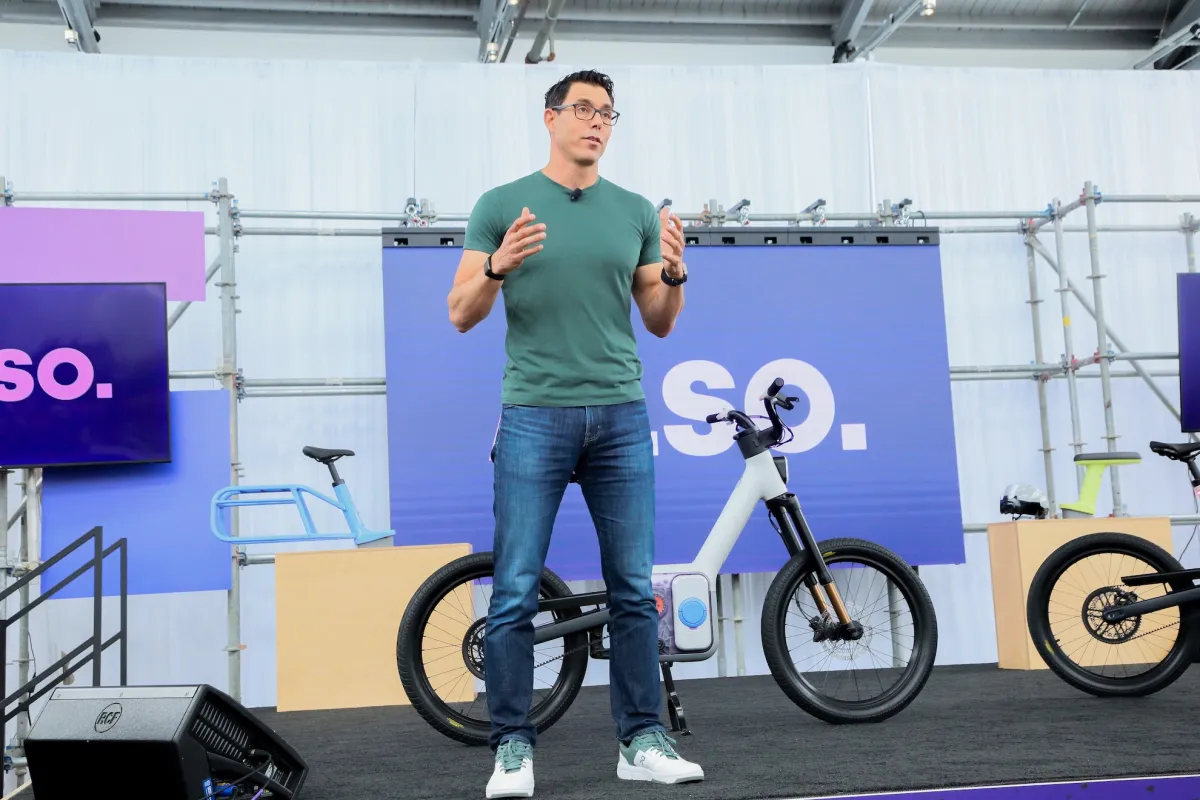
Recently, Rivian’s offshoot company Mind Robotics secured another $400 million, merely two months after raising $500 million. This rapid fundraising trend prompted me to reflect on founder RJ Scaringe’s unique talent for attracting venture capital and institutional investors to his initiatives.
In total, backers have invested $12.3 billion into Scaringe’s ventures—Also, Mind Robotics, and Rivian. This total excludes the nearly $12 billion amassed from Rivian’s IPO and the recent collaborations with Volkswagen Group and Uber, which could bolster Rivian’s funds by approximately $7 billion.
You can read my comprehensive piece on this topic here. For those who prefer a quick take, one significant insight emerged: Several insiders emphasized Scaringe’s remarkable ability to engage each person he talks to, making them feel valued, whether they are an investor, supplier, or executive.
This reinforces my ongoing argument against multitasking. Open to debate!
Several other noteworthy deals …
Arkeus, an Australian firm developing advanced perception software for autonomous drones and aircraft, garnered $18 million in a Series A funding round led by QIC Ventures, joined by R+VC, Folklore Ventures, DYNE Ventures, Main Sequence Ventures, Salus Ventures, and Beaten Zone.
Aseon Labs, based in Redwood City, California, has unveiled its charging, cleaning, and inspection depot for autonomous fleets, emerging from stealth with undisclosed support from Y Combinator.
Rapido raised $240 million in a round led by Prosus, raising its valuation to $3 billion with participation from existing investors such as WestBridge Capital and Accel. This round is part of a larger $730 million primary and secondary financing initiative.
Quantum Systems, a drone startup from Germany backed by Peter Thiel, is in discussions to secure around €600 million ($703 million) with investments from firms including Airbus and Blackstone, as reported by Bloomberg.
Notable reads and other tidbits

Is Redwood Materials prepared for an IPO? Senior reporter Sean O’Kane recently interviewed Deepak Ahuja, the company’s new CFO, recognizable to anyone familiar with Tesla as he was its former finance chief, and later held a similar role at Zipline.
Tesla has faced at least two crashes involving its Robotaxis since July 2025 while under the control of a teleoperator, based on recently disclosed information submitted to the National Highway Traffic Safety Administration.
Uber is expanding into India with the establishment of two new engineering campuses accommodating about 9,600 employees and a data center collaboration to enhance its product development and operational infrastructure.
Waymo has released a software update for its nearly 4,000-vehicle fleet to prevent them from encountering flooded roads, as part of a recall announced by the NHTSA. However, the company has yet to fully address the issue concerning its vehicles’ responses in such conditions.
One more thing …
Our premier annual tech conference, Disrupt, will take place in San Francisco this October. While that’s still some time away, I wanted to share that this year, we will feature six stages, which you can find here. One specifically relevant to this audience is our AI in the Real World Stage, where topics like robotics, autonomous systems, manufacturing, defense, and industrial applications will be explored.
When you purchase through links in our articles, we may earn a small commission. This doesn’t affect our editorial independence.
#ToolsMixAi #Mobility #skills #arms #race #coming #automotive