
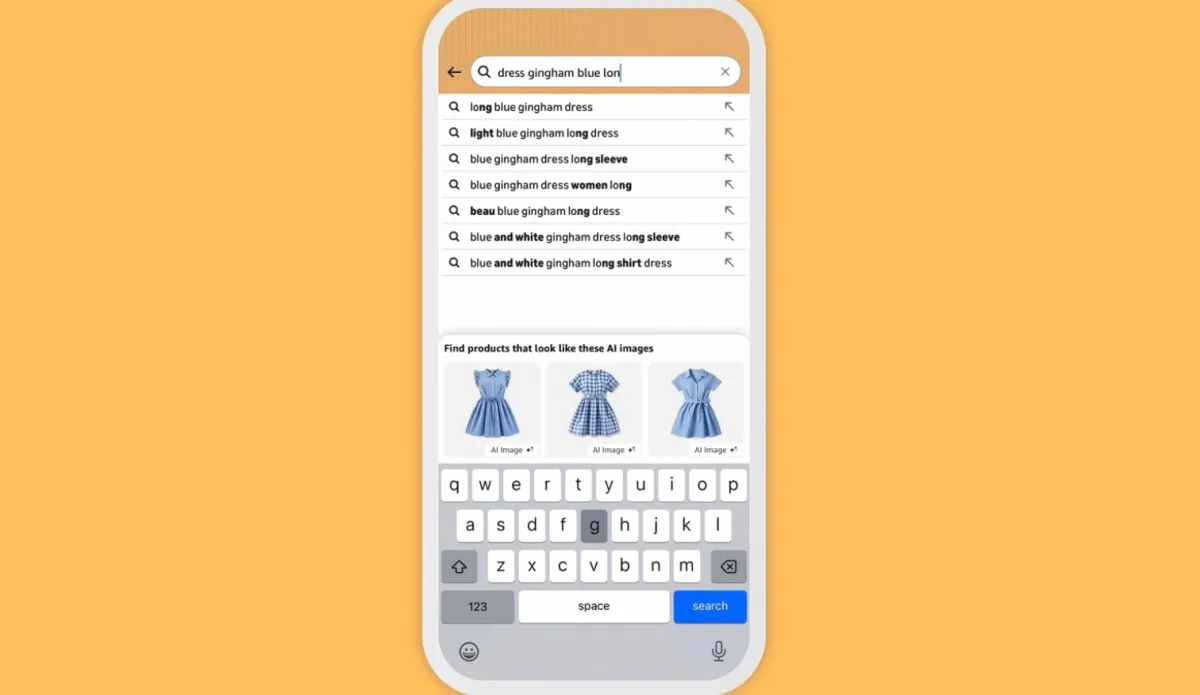

In a striking move for the retail sector, Amazon revealed on Wednesday that it plans to include AI-generated product images in its shopping app, tailored to users’ search queries. This development raises eyebrows as the company believes that fake images will assist shoppers in discovering items more effectively.
Here’s how the new feature is expected to function, as detailed in a blog post by Amazon. Users often have a product they are interested in but may lack the precise terminology to retrieve useful search results. For instance, terms like “cowl neck” or “rattan” might puzzle many shoppers.
Image Credits:Amazon
Upon entering a search term, shoppers will see various AI-generated images of products displayed below the autocomplete suggestions. For example, searching for a blue gingham dress might present users with a selection of styles—varying sleeve lengths, cuts, and other attributes—to choose from visually. Clicking on one of these images would then lead to search results that more closely align with that chosen style, driven by Amazon’s visual search technology.
However, this approach raises significant concerns. It seems unfathomable for a retailer to create fictional product visuals as a guide to direct users toward actual search results.
Firstly, this could be misleading. Shoppers who overlook the details might assume they are being led to a page with the specific dress, only to face disappointment when it’s not in stock. Furthermore, one must question the rationale behind fabricating product images when Amazon already possesses a vast library of authentic photos that online customers typically wish to view.
This feature is part of Amazon’s broader initiative to weave AI technology into its retail services, with mixed reactions. On a positive note, Amazon has successfully utilized AI to summarize customer reviews, allowing users to grasp essential pros and cons quickly. In a more peculiar twist, the company introduced an audio product summary feature last year, where AI-generated voices highlight a product’s key features, reminiscent of a podcast format.
Other recent advancements in Amazon’s AI capabilities include AI-generated “shoppable collages” focused on specific fashion styles, Amazon Lens Live for visual product matches through a camera, the option to add text to visual searches, and a Lock Screen widget for iOS that supports visual search.
Earlier this month, Amazon replaced its Rufus AI chatbot with Alexa for Shopping, enhancing the ability for users to make natural language shopping queries through voice and text.
This development is noteworthy as it showcases the ongoing experimentation with AI in retail. While Amazon is striving to enhance user experience, the reliance on AI-generated visuals could lead to customer dissatisfaction. As consumers become accustomed to authenticity in online shopping, the effectiveness of this feature in truly aiding their decision-making remains to be seen.
#Amazon #show #product #images #search #reason