
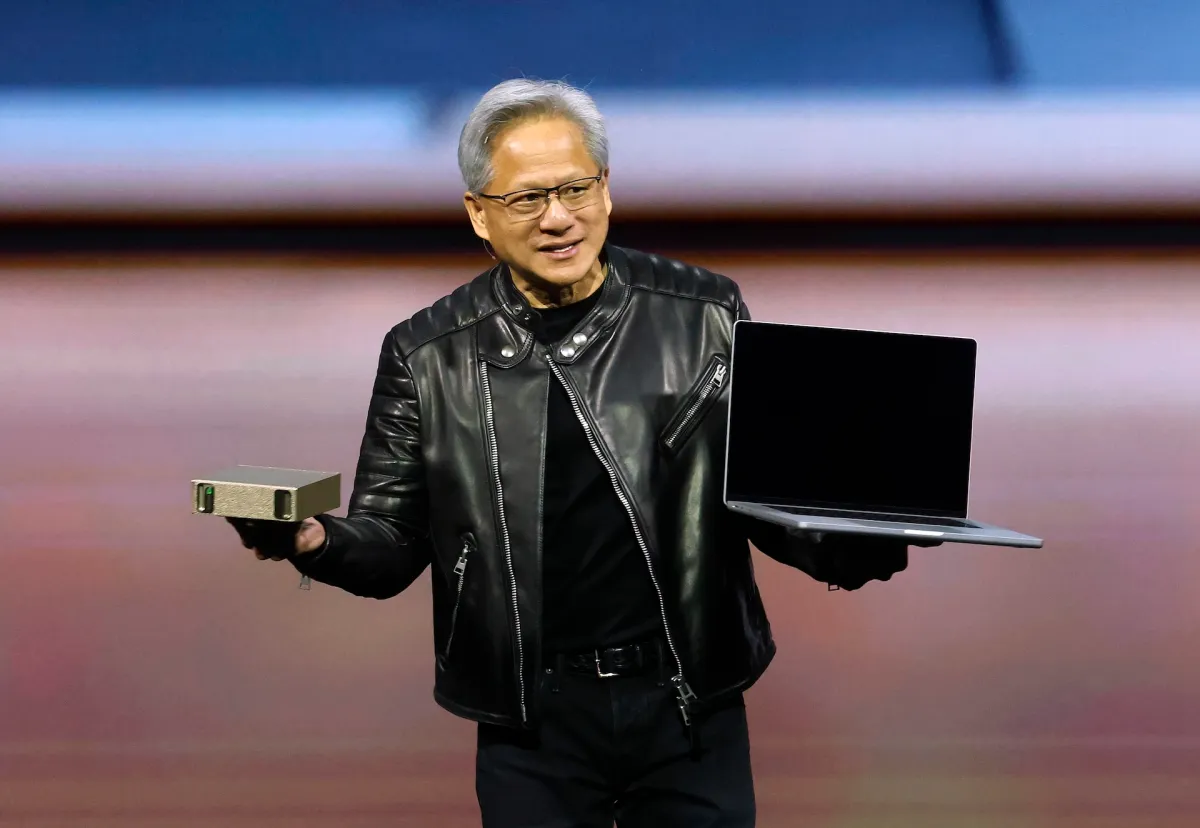

Nvidia launched the massive Computex trade show in Taipei on Sunday with an electrifying announcement. The chip manufacturer introduced a cutting-edge CPU named the RTX Spark, touted as a “superchip,” and revealed a roster of leading PC manufacturers committed to integrating this technology into upcoming AI-enabled devices.
This high-speed, 1-petaflop processor is engineered to securely operate AI agents, such as OpenClaw and Hermes Agent, according to Nvidia. Consumers can expect RTX Spark Windows PCs from renowned brands like ASUS, Dell, HP, Lenovo, Microsoft Surface, and MSI this fall, with models from Acer and Gigabyte anticipated soon thereafter.
These PCs will include secure sandboxes—developed in collaboration with Microsoft—to ensure safe operation of AI agents, along with ample CPU, GPU, RAM, and the Nvidia CUDA software necessary for running large language models locally.
Nvidia emphasized that its RTX technology promises enhanced performance for AI applications, superior image quality, and compatibility with AI features across more than 1,000 games and applications.
The company is positioning this innovation as a game-changer for content creators seeking to produce AI-driven material, while also offering a significant enhancement for its traditional gaming audience. Over 100 developers, including giants like Adobe, Blender, ComfyUI, Riot Games, and Xbox, have pledged their support for this new chip.
However, Jensen Huang, Nvidia’s founder and CEO, has broader ambitions for these PCs. He envisions a future free from the traditional app-launching and input methods we currently use.
“With RTX Spark and Microsoft Windows, you simply ask—and the PC handles the rest,” he proclaimed in a recent press release. “Frontier models. Creative workflows. RTX games. All on a laptop.”
Following a record-breaking quarter last month, Huang shared with investors his vision of a new $200 billion market for AI-centric CPUs, extending Nvidia’s reach beyond GPUs. He specifically referenced the high-end server CPU, Vera, launched this year, which has already generated $20 billion in sales.
Huang hinted at even bigger aspirations. “We’ll have billions of agents, all needing tools similar to how humans use PCs today,” he stated during the earnings call in May. “This drives the need for more CPUs.”
Historically, Nvidia’s attempts at ARM-based Windows devices have struggled; notably, in 2013, Microsoft had to write off $900 million after partners like Dell dropped support for its ARM-based Surface RT.
Yet, after consistently reporting record revenues, skepticism regarding Huang’s latest PC ambitions seems misplaced.
This new chip represents a substantial leap forward. It’s more formidable than what’s come before. In fact, Microsoft markets its version—the Surface Laptop Ultra—as “the most powerful Surface Laptop ever constructed,” leveraging the strength of the RTX Spark.
Nonetheless, specific details regarding pricing and configurations from PC manufacturers remain sparse. These systems are likely akin to Nvidia’s DGX Spark mini-computer, available to developers for approximately $4,800.
It remains to be seen if these new PCs will compete effectively with the cost-efficient Mac Mini, which has gained popularity for running OpenClaw, or if they will inhabit the high-end market like Nvidia’s own agent-operating mini computer.
Regardless, if Nvidia has truly succeeded in making AI agents accessible, safe, and functional for the general public, the implications could be enormous.
When you purchase through links in our articles, we may earn a small commission. This doesn’t affect our editorial independence.
#Nvidia #chases #200B #CPU #market #agent #PCs #Microsoft #Dell